
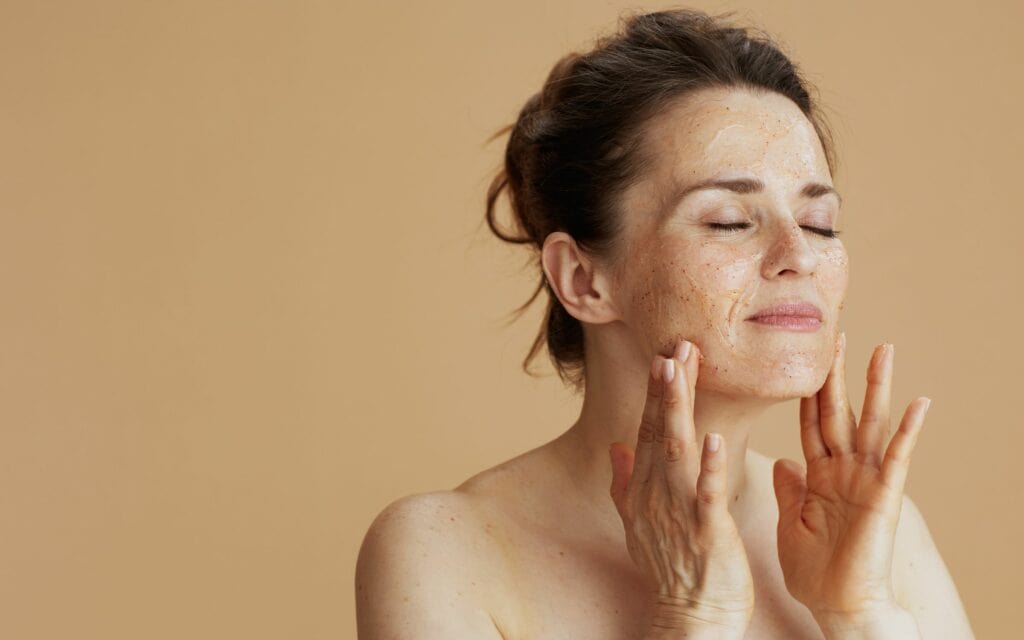
Welcome to The Derm Spot, your trusted source for dermatology and skin care advice. If you’re battling flaky skin on the face, those tight, papery patches that refuse to sit under makeup, you’re not alone. Is it just dryness, or is something else messing with your barrier? In 2025, we understand facial flaking better than ever, from over-exfoliation trends to climate stress and ingredient overload. This guide shows you exactly why your skin is peeling and how to calm it fast with a simple routine, smart ingredients, and clear red flags that mean it’s time to call a dermatologist.
What Flaky Facial Skin Is—And Isn’t
Dry Vs. Dehydrated Vs. Diseased Skin
Flaky skin on the face isn’t always “dry skin.”
- Dry skin: You’re low on oil (sebum). Flakes look fine and powdery: skin feels tight all day. Moisturizers rich in lipids help.
- Dehydrated skin: You’re low on water. You may look shiny and flaky at the same time. Fine lines deepen by evening. Humectants (like glycerin) plus an occlusive layer restore bounce.
- Diseased/Inflamed skin: Eczema, seborrheic dermatitis, psoriasis, or rosacea can all cause facial scaling. Flakes may be yellow, greasy, or thick: redness and burning are common. These conditions usually need targeted therapy.
A quick check: if rich cream soothes you for hours, you’re likely dry. If you feel tight again 30 minutes later, dehydration or inflammation is probably in the mix.
Triggers You Can Control Vs. Those You Can’t
- You can control: over-exfoliation, harsh cleansers, hot showers, fragrance-heavy products, aggressive retinoid schedules, and too many actives at once.
- You can’t fully control: genetics, seasonal humidity drops, wind, medications that dry skin, or underlying inflammatory conditions.
Your job: reduce controllable triggers and tailor care to support your barrier. For foundational reading on skin mechanics, explore our guides in Dermatology and Skin Health.
Main Causes In 2025
Barrier Disruption And Over-Exfoliation
The biggest driver of flaky skin on the face is a compromised barrier. In 2025, daily exfoliating toners, scrubs, micro-needling-at-home, and strong retinoids are common culprits. Signs you’ve overdone it: stinging with water, tightness after cleansing, and makeup pilling on dry patches. Pull back. Your barrier rebuilds in days to weeks when you stop the insults and feed it lipids and humectants.
Underlying Conditions: Eczema, Seborrheic Dermatitis, Psoriasis, Rosacea
- Eczema (atopic dermatitis): Itchy, red, scaly patches, often around eyes, neck, or cheeks. Barrier is genetically leaky: flares with stress, fragrances, cold air.
- Seborrheic dermatitis: Flaky and often greasy with redness around nose, brows, nasolabial folds, ears, hairline. Yeast (Malassezia) plays a role.
- Psoriasis: Sharply bordered plaques with silvery scale at the hairline, forehead, and brows. Family history helps the clue-in.
- Rosacea: Central facial redness, sensitivity, and flaking with flushing triggers (heat, alcohol, spicy foods). Look for papules/pustules or visible vessels.
Medications, Actives, And Environment
- Medications: Isotretinoin, topical retinoids, benzoyl peroxide, acne antibiotics, diuretics, and some acne/anti-aging kits can induce peeling.
- Actives: AHAs (glycolic, lactic), BHAs (salicylic), PHA toners, vitamin C in strong acids, high % niacinamide, and peels stacked together.
- Environment: Cold, windy, or desert climates: indoor heating: long hot showers: high-altitude trips: frequent air travel. Consider seasonal routine shifts.
Step-By-Step Home Routine
72-Hour Reset For Active Flaking
If you’re peeling right now, do a 3-day reset:
- Cleanse: Use a creamy, non-foaming cleanser, lukewarm water, and hands only. Pat, not rub, dry.
- Mist or dampen: On slightly damp skin, apply a hydrating essence or just leave a thin water layer before moisturizer.
- Moisturize: Use a barrier cream with ceramides, cholesterol, and fatty acids. If very flaky, seal with a small amount of petrolatum or a petrolatum-alternative balm at night.
- Pause: Stop exfoliants, retinoids, benzoyl peroxide, and vitamin C acids. Sunscreen stays in.
- Frequency: Morning and night. You should feel more comfortable within 72 hours.
AM Protection Routine
- Gentle cleanse (or rinse only if not oily).
- Hydrating serum: glycerin, hyaluronic acid, panthenol, or ectoin to bind water.
- Barrier moisturizer: ceramides + squalane or shea.
- Sunscreen: Broad-spectrum SPF 30–50, ideally mineral (zinc oxide) if sensitive. Look for formulas labeled “non-irritating,” “barrier-friendly,” or for sensitive skin.
- Optional: If seborrheic dermatitis is your culprit, a thin layer of 1% ketoconazole or ciclopirox cream (if prescribed) on hotspots under moisturizer.
PM Repair And Retinoid Titration
- Double cleanse only if wearing makeup/sunscreen: otherwise a single gentle cleanse.
- Hydrating layer: glycerin/HA + panthenol or a soothing toner (alcohol-free).
- Repair cream: ceramide-cholesterol-fatty acid blend: consider niacinamide 2–5% for barrier support (higher strengths can irritate).
- Retinoid “sandwich” on non-flare nights: moisturizer → pea-size retinoid → moisturizer. Start 1–2 nights/week, increase as tolerated. If you’re actively flaking, pause retinoids for 1–2 weeks and restart slower.
- Specific conditions: For eczema or facial psoriasis, ask your dermatologist about steroid-sparing topicals (tacrolimus/pimecrolimus, ruxolitinib) to minimize steroid use on the face.
For ingredient deep-dives and strengths, check our Skincare Ingredients A to Z.
Ingredients That Help (And What To Pause)
Hydrators And Barrier Builders
- Ceramides (NP, AP, EOP) + cholesterol + free fatty acids: replenish your lipid matrix.
- Glycerin, hyaluronic acid (varied molecular weights), panthenol: pull water into the skin.
- Urea 2–5%: hydrates and softens flakes without harsh exfoliation.
- Squalane, shea butter, triglycerides: reduce transepidermal water loss.
- Ectoin and beta-glucan: 2025 favorites for stress protection and calming.
Gentle Exfoliation Rules
Once calm (no sting, no visible peeling), reintroduce exfoliation carefully:
- Choose one: lactic acid 5–8% 1–2x/week, or salicylic acid 0.5–1% for clogged pores.
- Avoid stacking: don’t layer acids with retinoids the same night.
- Physical scrubs? If used, choose ultra-fine, once weekly, and stop at the first sign of sting.
- For seborrheic flakes, consider periodic azelaic acid 10–15%, it’s keratolytic and anti-inflammatory.
Irritants And Fragrance Considerations
- Fragrance, essential oils, and menthol can sting compromised skin. Skip until stable.
- High alcohol content toners and astringents dry you out.
- Strong L-ascorbic acid (vitamin C) formulas can irritate: try gentler derivatives once you’re healed.
- If you react to everything, ask about patch testing to rule out allergy. See our Dermatology library for allergy guidance.
Lifestyle, Tools, And Makeup Tips
Humidity, Showers, And Towels
- Keep indoor humidity 40–50%. In winter, run a humidifier near your bed.
- Showers: 5–8 minutes, warm not hot. Cleanser only on sweaty/oily zones: just rinse cheeks.
- Pat with a soft microfiber towel: avoid rubbing. Apply moisturizer within 60 seconds of toweling.
Devices And Tech: Humidifiers, LED, Trackers
- Humidifiers: Top-fill, easy-to-clean models reduce mold risk, clean 2–3 times weekly.
- Red LED (around 630–660 nm) can calm mild inflammation: use per device instructions 3–5x/week. Skip on active infection or open cracks.
- Skin trackers and apps: Logging product changes, weather, and flare days helps you spot patterns. This is especially useful if you’re navigating conditions like rosacea or eczema. For advanced options, our Cosmetic Treatments section covers devices and clinic tech trends.
Flake-Friendly Makeup Application
- Start with a thin, hydrating primer.
- Opt for creamy, satin finishes over matte: powders amplify flakes.
- Use a damp sponge to press (not drag) tinted moisturizer or foundation.
- Spot-conceal with a tiny brush: avoid layering over actively peeling patches.
- End with a fine mist rather than heavy powder to set.
When To See A Dermatologist
Red Flags And Differential Clues
- Sudden, severe redness with painful cracking, honey-colored crusts, or oozing (possible infection).
- Thick, silvery scale at hairline/brows or nail changes (think psoriasis).
- Yellow, greasy scale around nose/brows with itching that returns quickly after moisturizing (seborrheic dermatitis).
- Persistent central redness with stinging, flushing, or acne-like bumps (rosacea).
- Flaking unresponsive to a 2-week barrier-first approach.
- New meds recently started (isotretinoin or topical acne regimens) with intolerable peeling.
In-Office Treatments And Tests
- Diagnosis tools: Dermoscopy, KOH scraping (rules out fungal), bacterial culture if infected, and patch testing for contact allergy.
- Prescriptions: Antifungals (ketoconazole, ciclopirox) for seb derm: calcineurin inhibitors or short courses of low-potency steroids for eczema/psoriasis on the face: ivermectin or metronidazole for rosacea: ruxolitinib cream for select eczema cases. Your dermatologist will individualize.
- Procedures: Gentle in-office peels for texture only after the barrier is stable: light-based rosacea treatments (e.g., IPL) for persistent redness. Explore more in Skin Health and our Cosmetic Treatments hub.
Conclusion
Flaky skin on the face is usually a signal, not a sentence. When you simplify your routine, rebuild your barrier, and pace your actives, your skin can get comfortable again quickly. Use the 72-hour reset when you flare, protect with sunscreen daily, and reintroduce exfoliation and retinoids slowly. If flakes persist or you see red flags, loop in a dermatologist early. Your face will thank you, and yes, your makeup will sit better, too.
Frequently Asked Questions
What’s the difference between dry, dehydrated, and diseased flaky skin on the face?
Dry skin lacks oil and sheds fine, powdery flakes that improve with rich moisturizers. Dehydrated skin lacks water, so it can look shiny yet flaky and feel tight again within 30 minutes. Diseased or inflamed causes (eczema, seborrheic dermatitis, psoriasis, rosacea) add redness, burning, thicker or greasy scales, and need targeted therapy.
What’s the fastest way to calm flaky skin on the face?
Do a 72-hour reset: cleanse gently with a creamy, non-foaming wash; apply humectants on damp skin; use a ceramide-cholesterol–fatty acid barrier cream; optionally seal with a thin petrolatum layer at night; stop exfoliants, retinoids, benzoyl peroxide, and strong vitamin C; keep sunscreen in. Comfort usually improves within three days.
Which ingredients help repair flaky facial skin, and what should I pause?
Help your barrier with ceramides, cholesterol, fatty acids, glycerin, hyaluronic acid, panthenol, squalane, shea, urea 2–5%, ectoin, and beta-glucan. Once calm, reintroduce gentle acids (lactic 5–8% or salicylic 0.5–1%) 1–2 times weekly. Pause harsh toners, fragrance, high alcohol, strong L‑ascorbic acid, and avoid stacking acids with retinoids.
When should I see a dermatologist for facial flaking?
Seek care for sudden severe redness, painful cracks, honey-colored crusts or oozing, thick silvery scale at the hairline, yellow greasy flakes that recur quickly, persistent central redness with stinging or bumps, flaking unresponsive to two weeks of barrier-first care, or intolerable peeling after new medications like isotretinoin or topical acne regimens.
Does diet or hydration affect flaky skin on the face?
Yes, indirectly. Adequate water, omega-3 fatty acids (fish, flax), and a balanced diet support the skin barrier. Alcohol, very spicy foods, and hot beverages can trigger flushing in rosacea-prone skin. Sudden restrictive diets may worsen dryness. If flaking persists despite good skincare and nutrition, consult a dermatologist.
Is slugging safe for flaky skin on the face, and how should I do it?
Slugging—sealing with a thin petrolatum layer—can reduce water loss and soothe flaky skin on the face. Apply a pea-sized amount over a ceramide moisturizer at night, 2–4 times weekly. Avoid if you’re very acne-prone or actively greasy/seborrheic. Keep actives minimal on slugging nights to prevent irritation.