
Welcome to The Derm Spot, your trusted source for dermatology and skin care advice. If you’ve ever faced the frustration of constant shaving or waxing you’re not alone. Many people wonder which permanent hair removal method truly works best.
In 2025, the debate between electrolysis vs laser hair removal continues to gain attention as technology advances. Choosing the right treatment can save you time, money, and hassle while delivering lasting results. This article will help you understand the key differences, benefits, and what to expect from each option.
By exploring terms like “permanent hair reduction” and “hair removal technology,” you’ll be equipped to make an informed decision tailored to your skin type and goals. Let’s dive into the details and unveil the best method for your permanent hair removal journey.
Understanding Permanent Hair Removal
Permanent hair removal focuses on eradicating unwanted hair by targeting hair follicles beneath the skin. The goal lies in disabling these follicles to prevent hair regrowth, offering long-term smoothness. Both electrolysis and laser hair removal achieve this but differ in technology, effectiveness, and suitability for various skin and hair types.
What Is Electrolysis?
Electrolysis removes hair by applying an electric current directly into each hair follicle through a fine needle. This current destroys the follicle’s ability to produce hair, resulting in permanent removal. The process suits all hair colors and skin tones because it doesn’t rely on pigment.
Key Features of Electrolysis:
- Precision treatment: Targets individual follicles, making it ideal for small areas such as eyebrows, upper lip, and chin.
- Efficacité: Offers permanent hair removal backed by FDA approval as the only method guaranteed to remove hair permanently.
- Multiple sessions: Requires 15–30 sessions spaced weeks apart, depending on hair growth cycles and treatment area size.
- Pain level: Causes discomfort during treatment; topical anesthetics can reduce pain.
Advantages for different skin types: Electrolysis works on all skin tones, including darker or tanned skin, since it does not depend on melanin. It excels when treating light-colored hair such as blonde, gray, or red, which laser often misses.
Considerations for daily skin care: After electrolysis, keep skin clean and moisturized to prevent irritation. Avoid sun exposure and use sunscreen to protect sensitive skin during healing.
What Is Laser Hair Removal?
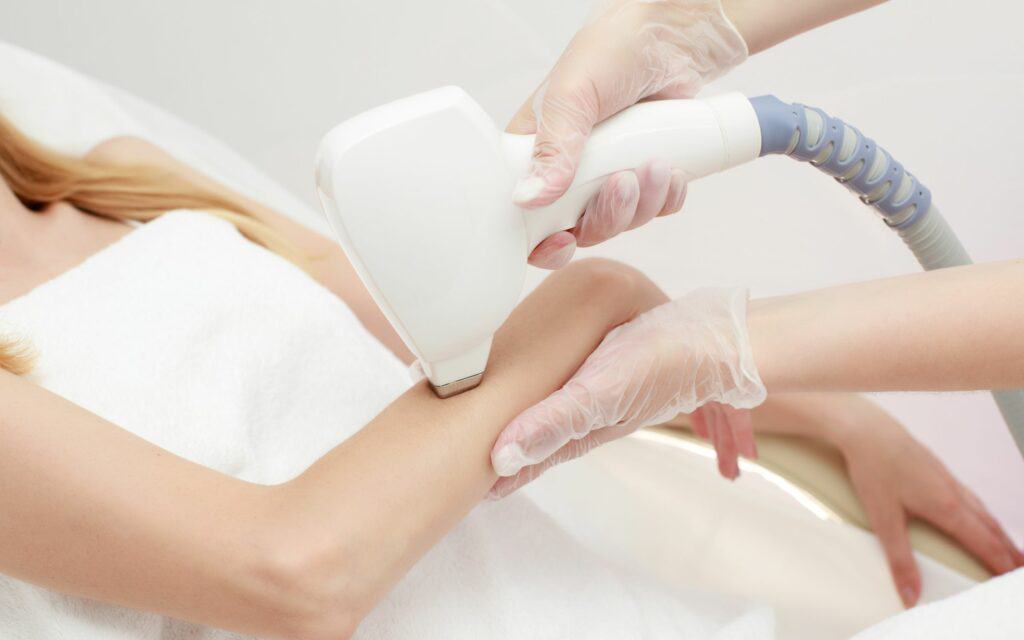
Laser hair removal targets hair follicles using concentrated light beams absorbed by the pigment melanin in the hair shaft. The heat damages the follicle, inhibiting future hair growth. This method works best on individuals with light skin and dark hair due to the contrast needed for effective pigment absorption.
Key Features of Laser Hair Removal:
- Treatment speed: Covers larger areas quickly, suitable for legs, back, and arms.
- Sessions required: Usually requires 6–8 sessions spaced 4–6 weeks apart for permanent reduction, though occasional maintenance may be necessary.
- Pain and recovery: Produces a snapping sensation during treatment with minimal downtime. Cooling devices reduce discomfort.
Best suited for: People with lighter skin and dark, coarse hair benefit the most from laser hair removal. It may be less effective on light-colored, gray, or fine hair due to insufficient pigment. Recent advancements include lasers designed for darker skin tones, reducing risk of burns or discoloration.
Post-treatment care: Avoid sun exposure, use soothing lotions, and apply sunscreen regularly. Skin may temporarily redden or swell, but symptoms usually resolve within a few days.
| Fonctionnalité | Electrolysis | Épilation au laser |
|---|---|---|
| Suitable Hair Color | All colors including white and gray | Best for dark hair |
| Suitable Skin Type | Tous types de peau | Best for light to medium skin tones |
| Treatment Area | Small, precise areas | Large body areas |
| Number of Sessions | 15–30 sessions | 6–8 sessions |
| Niveau de douleur | Moderate discomfort | Mild discomfort |
| FDA Approval for Permanent Removal | Yes | Permanent hair reduction only |
Both electrolysis and laser hair removal fall under cosmetic treatments frequently covered in dermatology and skin health discussions. For more detailed insights on skin care and treatment options, visit The Derm Spot’s Dermatology category et Traitements cosmétiques.
For maintaining healthy skin during and after hair removal, explore practical care tips in the Santé de la peau et Soins du corps sections. Understanding the role of Ingrédients des soins de la peau can enhance your post-treatment routine and optimize results.
Electrolysis vs Laser Hair Removal: Key Differences
Understanding the differences between electrolysis and laser hair removal helps optimize your skin and hair care strategy. Both methods aim at permanent hair removal but vary significantly in their technology, suitability, and treatment experience.
Mécanisme d'action
Electrolysis destroys individual hair follicles using an electric current delivered through a fine probe inserted into each follicle. This process causes a chemical reaction that permanently disables the follicle’s ability to produce hair. It’s effective on all hair colors and skin tones because it targets the follicle directly, not pigment.
Laser hair removal uses focused light beams absorbed by melanin in the hair shaft. The light energy converts to heat, damaging the follicle to inhibit hair regrowth. It works best on darker hair and lighter skin due to higher contrast, which allows the laser to target pigment efficiently without harming surrounding skin.
| Fonctionnalité | Electrolysis | Épilation au laser |
|---|---|---|
| Target | Hair follicle through electric current | Melanin in the hair shaft via light absorption |
| Suitable hair colors | All colors | Primarily dark hair |
| Suitable skin tones | Tous types de peau | Best for light skin tones |
| Treatment precision | Single hair follicles | Larger treatment areas |
Treatment Duration and Sessions
Electrolysis treats each hair follicle individually, which makes sessions longer and more frequent, especially for larger areas. You can expect 15 to 30 sessions spread over several months to achieve noticeable permanent results. Sessions typically last 15–60 minutes depending on the area size.
Laser hair removal covers broader areas quickly, with each session lasting 15–45 minutes depending on the treatment region. Most people need 6 to 8 sessions, spaced 4 to 6 weeks apart, to address hairs in different growth phases. It’s time-efficient for larger zones like legs or back.
| Treatment Aspect | Electrolysis | Épilation au laser |
|---|---|---|
| Session length | 15 to 60 minutes | 15 to 45 minutes |
| Number of sessions | 15 to 30+ | 6 to 8 |
| Treatment interval | Weekly to bi-weekly | Every 4 to 6 weeks |
| Area suitability | Small to medium areas | Medium to large areas |
Pain and Discomfort Levels
Electrolysis typically causes a pricking or stinging sensation as the probe targets each follicle. Pain varies by individual pain threshold and area treated but can be more noticeable compared to laser. Topical anesthetics may reduce discomfort during sessions.
Laser hair removal feels like light snapping or warm pulses on the skin’s surface. Most experience mild discomfort that subsides quickly. Cooling devices or gels commonly used during sessions minimize pain and skin irritation.
| Facteur de douleur | Electrolysis | Épilation au laser |
|---|---|---|
| Sensation | Pricking, stinging | Light snapping, heat |
| Pain level | Moderate to higher | Léger à modéré |
| Pain management | Topical anesthetics possible | Cooling gels and devices |
For more detailed insights into skin reactions and post-treatment care, explore The Derm Spot’s dermatology section. Proper skin hydration and sun protection after either procedure aid healing and reduce irritation risks, integral to your skin health journey.
In comparison, electrolysis guarantees permanent hair removal across hair colors and skin types, which aligns with needs where laser is less effective. Laser offers quicker treatment for large, dark-haired, light-skinned individuals with minimal downtime. Your choice depends on your hair color, skin tone, treatment area, and pain tolerance.
Explorer ressources pour la santé des cheveux for additional guidance on maintaining hair removal results and managing hair growth cycles.
Effectiveness and Results in 2025
Understanding the effectiveness and results of electrolysis and laser hair removal reveals which method suits your permanent hair removal goals in 2025. This section highlights long-term hair reduction rates and suitability for various skin and hair types based on recent advancements.
Long-Term Hair Reduction Rates
Electrolysis and laser hair removal provide permanent hair reduction but differ in success rates and timelines.
Electrolysis
- Delivers 100% permanent hair removal when performed by licensed professionals due to its follicle-destroying electric current.
- Requires 15 to 30 sessions depending on hair density, thickness, and growth cycles.
- Suitable for small to medium areas, especially where precise results matter, like the face or eyebrows.
- Hair regrowth after treatment is rare but may occur if sessions are incomplete or maintenance is neglected.
Épilation au laser
- Offers 70% to 90% hair reduction after 6 to 8 sessions spaced 4 to 6 weeks apart, with results improving over time.
- Effective mainly on dark, coarse hair due to melanin targeting by laser light.
- Covers larger areas efficiently, including legs, back, and arms, with sessions lasting 15 to 45 minutes.
- Touch-up treatments may be necessary annually for maintenance, especially if hormonal changes affect hair growth.
The following table summarizes the key differences in hair reduction rates:
| Traitement | Sessions Required | Long-Term Reduction Rate | Maintenance Needed | Coverage |
|---|---|---|---|---|
| Electrolysis | 15–30 | 100% permanent | Rare, if at all | Small to medium areas |
| Épilation au laser | 6–8 | 70%-90% | Possible annual touch-ups | Large areas |
Advances in both technologies optimize results. For example, newer laser devices adapt wavelengths to suit a broader range of skin tones, improving long-term reduction outcomes.
Convient à différents types de peau et de cheveux
Choosing the best permanent hair removal method depends largely on your skin tone and hair color or texture, as effectiveness varies:
Electrolysis
- Suitable for all skin tones, including darker skin, because it uses electrical current rather than light targeting melanin.
- Effective on any hair color, including light, gray, red, or blonde hair that laser devices typically cannot remove.
- Works well for fine and coarse hair, making it a versatile choice for diverse hair types.
- Ideal for individuals with patchy or resistant hair growth where precision is key.
Épilation au laser
- Most effective on light to medium skin tones with dark hair (brown or black) since lasers target the pigment in the hair shaft.
- Less effective on blonde, gray, red, or white hair because of lower melanin content.
- Advances in laser technology, like Nd:YAG and diode lasers, expand suitability to darker skin tones by using longer wavelengths that penetrate deeper with reduced skin surface heating.
- Usually less suitable for very fine or vellus hair due to insufficient melanin for laser targeting.
Consider the following suitability matrix:
| Skin Tone | Hair Color | Electrolysis Suitability | Laser Suitability |
|---|---|---|---|
| Light (Fitzpatrick I-III) | Dark (brown/black) | Haut | Haut |
| Medium (Fitzpatrick IV) | Dark | Haut | Moderate to High (Nd:YAG lasers recommended) |
| Dark (Fitzpatrick V-VI) | Dark | Haut | Moderate (Nd:YAG laser best) |
| Any | Light/Blonde/Gray | Haut | Faible |
Key Considerations Based on Skin and Hair
- You have sensitive or darker skin: Electrolysis avoids pigmentation risks because it bypasses melanin, unlike some lasers that can cause burning or discoloration.
- You have light or red hair: Electrolysis outperforms laser hair removal, as these hair colors provide too little pigment for effective laser treatment.
- You prefer quicker treatment over large areas: Laser hair removal treats broader regions faster but requires multiple sessions and periodic touch-ups.
- You want guaranteed permanent results on targeted hairs: Electrolysis provides permanent destruction of individual follicles and is the only FDA-approved method for permanent hair removal.
Additional Factors Impacting Effectiveness
- Cycle de croissance des cheveux: Both treatments require patience because hair follicles cycle through growth phases; treatment timing affects results.
- Treatment provider expertise: Selecting a certified professional ensures optimized results and minimized adverse effects.
- Post-treatment care: Following recommended aftercare, such as sun protection and skin hydration, supports optimal recovery and results. For guidance on skincare routines, explore Santé de la peau et Soins du corps ressources.
Related Terms for Further Research
- Permanent hair removal techniques
- Melanin and hair follicle biology
- Fitzpatrick skin types and laser suitability
- Electrical current hair removal technology
- Laser device wavelengths and applications
For more detailed insights on skin conditions and treatments, browse our Dermatologie et Traitements cosmétiques categories. For hair concerns beyond hair removal, including maintenance and health, visit Santé des cheveux.
Sécurité et effets secondaires
Understanding the safety and side effects of electrolysis and laser hair removal helps you make an informed choice for permanent hair removal. Both methods involve targeting hair follicles but differ in risks tied to skin and hair reaction.
Potential Risks of Electrolysis
Electrolysis uses an electric current to destroy individual hair follicles. Despite its FDA approval for permanent removal, electrolysis presents some risks to your skin and hair:
- Skin Irritation: Redness, swelling, and tenderness commonly occur right after treatment, especially on sensitive skin areas.
- Hyperpigmentation and Hypopigmentation: Darker skin types or improper technique can cause changes in skin color, leading to either dark spots or light patches.
- La cicatrisation: Aggressive treatment or improper needle insertion can lead to permanent scarring, though professional care minimizes this risk.
- Infection: Since electrolysis involves needle insertion, poor hygiene increases the chance of skin infections.
- Pain and Discomfort: Moderate to high discomfort is typical during sessions, particularly on coarse hair or sensitive zones like the face.
Preventive Steps to reduce complications include:
- Choosing a licensed electrologist with experience in your skin and hair type.
- Avoiding sun exposure and tanning before and after treatment to lessen pigmentation issues.
- Following post-treatment care guidelines focusing on skin hydration and gentle cleansing.
If you notice persistent redness, swelling, or signs of infection beyond a few days, seek professional dermatology advice from trusted sources such as Le Derm Spot Dermatologie.
Potential Risks of Laser Hair Removal
Laser hair removal targets melanin in hairs, using concentrated light beams, making skin and hair type key factors in safety:
- Skin Burns and Blisters: Risk increases if the laser settings aren’t matched to your skin tone; darker skin tones require specific lasers to avoid burns.
- Pigmentation Changes: Temporary hyperpigmentation or hypopigmentation can result, especially for those with darker or sensitive skin.
- Eye Injury: Improper eye protection during treatment can cause damage, emphasizing the necessity of protective eyewear.
- Mild Discomfort: A sensation similar to rubber band snaps is common but typically less painful than electrolysis.
- Paradoxical Hair Growth: In rare cases, laser treatment can stimulate hair growth in nearby areas.
Safety Measures to follow include:
- Consulting certified laser technicians skilled in handling various skin tones.
- Conducting patch tests before full treatments.
- Strict post-care involving avoiding sun exposure, using broad-spectrum sunscreen, and moisturizing, available details at Santé de la peau.
Side Effects Comparison Table
| Side Effect | Electrolysis | Épilation au laser |
|---|---|---|
| Skin Irritation | Common redness, swelling, tenderness | Mild redness, swelling |
| Pigmentation Changes | Possible hyper/hypopigmentation | Possible hyper/hypopigmentation |
| La cicatrisation | Possible if improperly done | Rare |
| Infection | Risk due to needle penetration | Minimal risk |
| Niveau de douleur | Moderate to high discomfort | Mild to moderate discomfort |
| Duration of Side Effects | Few days to weeks | Few hours to days |
Electrolysis suits all hair and skin colors but needs more careful technique to avoid skin damage. Laser hair removal works best on light to medium skin with dark hair but advances in technology now offer options for darker skin tones too. For more on laser types and their fit for each skin tone, visit Traitements cosmétiques.
Quand demander l'avis d'un professionnel
Seek professional care if you experience:
- Persistent skin redness, swelling, or pain beyond typical recovery.
- Signs of infection like pus, increased warmth, or fever.
- Unexpected changes in skin tone lasting over two weeks.
- Severe discomfort or allergic reactions during or after treatment.
Consult board-certified dermatologists or licensed hair removal specialists. Continual skin monitoring reduces risks and enhances results for permanent hair removal methods.
For additional guidance on hair and skin health maintenance before and after treatments, explore resources on Santé des cheveux et Soins du corps. Understanding skincare ingredients that soothe and protect post-treatment skin can improve healing—you may find helpful insights at Ingrédients des soins de la peau de A à Z.
Cost Comparison and Accessibility
Understanding the costs and access differences between electrolysis and laser hair removal helps you make a realistic choice for permanent hair removal in 2025. The financial investment and availability of each method vary significantly depending on factors like treatment area, hair and skin type, and geographic location.
Initial and Maintenance Costs
Initial costs for electrolysis generally appear higher due to the time-intensive nature of treating individual hair follicles. You can expect to pay between $30 and $100 per 15 to 60-minute session, depending on clinic location and treatment size. Since electrolysis often requires 15 to 30 sessions—or more for larger areas—the total upfront cost may reach $1,000 to $3,000 or more.
Laser hair removal offers lower per-session prices on average, with costs ranging from $200 to $500 per session for medium-sized areas. You typically need 6 to 8 sessions for substantial long-term hair reduction, totaling $1,200 to $4,000. Larger treatment zones like legs or back can drive prices higher. Advanced laser technologies suitable for darker skin tones may carry additional costs.
Maintenance is a major consideration. Electrolysis guarantees 100% permanent hair removal on treated follicles when done by certified professionals, eliminating the need for future touch-ups. This translates to no ongoing expenses once the treatment course completes.
Laser hair removal usually results in 70 to 90% hair reduction. Periodic maintenance sessions every 6 to 12 months may be necessary to manage regrowth, adding to lifetime costs. You should budget an additional $200 to $500 per touch-up session.
| Cost Type | Electrolysis | Épilation au laser |
|---|---|---|
| Per Session Cost | $30 – $100 per 15–60 minutes | $200 – $500 per session |
| Total Initial Cost | $1,000 – $3,000+ for complete | $1,200 – $4,000 for 6-8 sessions |
| Maintenance Required | Minimal or none after completion | Periodic touch-ups needed |
| Maintenance Cost | None after course | $200 – $500 per touch-up |
Availability of Treatments in 2025
Accessibility depends on your location, skin and hair type, and clinic expertise. Electrolysis services are widely available through licensed electrologists, especially in urban areas. The treatment suits all skin tones and hair colors, making it accessible to individuals with lighter hair shades that lasers may not treat effectively.
Laser hair removal clinics have expanded globally with innovations in devices targeting various skin tones, including Fitzpatrick scale IV to VI, broadening accessibility for darker skin. Despite advancements, it’s still challenging to find experienced practitioners for safe, effective treatment on light or red hair.
The treatment speed of laser hair removal makes it a popular choice in metropolitan regions with many cosmetic clinics. In contrast, the slower nature of electrolysis means fewer providers offer it, which can limit availability in rural areas.
Both methods require professional consultation to assess suitability, especially for sensitive or darker skin. You can easily locate qualified providers at certified medical spas or dermatology clinics listed on professional registries or by visiting The Derm Spot’s cosmetic treatments resource.
| Factor | Electrolysis | Épilation au laser |
|---|---|---|
| Provider Availability | High in urban, moderate rural | Very high urban, moderate rural |
| Suitability for Skin Types | All skin tones and hair colors | Best: light to medium skin with dark hair; improved tech for darker skin |
| Treatment Speed | Slower, per follicle | Faster, larger areas per session |
| Required Expertise | Licensed electrologist essential | Trained technician or dermatologist recommended |
For detailed guidance on maintaining skin health during and post-treatment, explore the santé de la peau et santé des cheveux categories. Proper skincare before and after your sessions reduces risks like irritation, hyperpigmentation, and infection, common concerns associated with both treatments. Incorporating targeted ingrédients des soins de la peau like soothing botanicals and barrier-repair agents supports healing and improves outcomes.
Choosing between electrolysis and laser hair removal hinges on matching treatment costs, availability, and your skin and hair characteristics to your long-term preferences for permanent hair removal.
Choosing the Right Method for You
Selecting between electrolysis and laser hair removal depends on your unique skin and hair characteristics, treatment goals, and tolerance for discomfort. Understanding key factors and expert advice helps you make a well-informed decision for permanent hair removal in 2025.
Factors to Consider
Assess your skin type, hair color, and treatment area carefully to determine which method suits you best. Take the following into account:
Skin Tone
- Opt for electrolysis if you have darker skin tones; it works effectively regardless of melanin levels.
- Select laser hair removal if you have light to medium skin tones for better efficacy, although some newer laser technologies now support darker skin.
Hair Color
- Choose electrolysis for light, red, or gray hair types since it targets follicles directly without relying on pigment.
- Choose laser hair removal if you have dark hair, as it targets melanin in hair follicles.
Treatment Area Size
- Prefer laser hair removal for large zones like legs or back, since it treats multiple hairs simultaneously.
- Rely on electrolysis for smaller areas such as eyebrows or upper lip for precision.
Pain Tolerance
- Prepare for mild to moderate discomfort with laser hair removal.
- Expect higher discomfort with electrolysis, but topical anesthetics can reduce it.
Engagement en termes de temps
- Plan for 6 to 8 laser sessions, each lasting 15 to 45 minutes.
- Schedule 15 to 30 electrolysis sessions, each lasting 15 to 60 minutes.
Budget
- Consider laser hair removal generally costs less per session but might require occasional maintenance.
- Factor in higher upfront costs for electrolysis due to more sessions, but it guarantees permanent removal.
Skin Sensitivity and Conditions
- If you have sensitive or damaged skin, consult a dermatologist before initiating either treatment to minimize risks like irritation or hyperpigmentation.
| Factor | Electrolysis | Épilation au laser |
|---|---|---|
| Skin Tone Suitability | All skin tones | Best for light to medium |
| Hair Color Effectiveness | All hair colors | Most effective on dark hair |
| Treatment Duration | 15–30 sessions (15–60 min) | 6–8 sessions (15–45 min) |
| Niveau de douleur | Moderate to high discomfort | Mild to moderate discomfort |
| Coût | Higher upfront cost | Lower per session, possible maintenance |
Expert Recommendations
Experts recommend choosing your hair removal method based on personal factors aligned with safety and effectiveness standards. They emphasize the following:
- Consultation with Certified Professionals
Confirm treatment suitability with licensed dermatologists or certified technicians, especially for sensitive skin or complex cases.
- Consider Hair Growth Cycles
Schedule treatments according to your hair growth phases to optimize permanent results for both electrolysis and laser hair removal.
- Evaluate Technology Advances
Review the latest devices and protocols. For instance, newer laser systems with longer wavelengths now safely treat darker skin tones while minimizing side effects.
- Prioritize Post-Treatment Care
Follow strict sun protection and skin hydration routines after each session to prevent complications such as pigmentation changes or irritation.
- Monitor Progress and Side Effects
Track hair reduction and skin reactions across sessions. Report persistent side effects like burning or scarring to your provider promptly.
- Balance Treatment Goals and Lifestyle
Choose electrolysis if you want guaranteed permanent removal and can accommodate longer treatment time. Opt for laser hair removal for faster coverage with significant hair reduction.
For detailed advice and skin care tips related to hair removal methods, explore related resources on dermatologie, santé de la peau, et santé des cheveux. Learn about healing and protection using topical agents from our Guide des ingrédients pour les soins de la peau. Enhance your knowledge on cosmetic procedures through our cosmetic treatments category.
Conclusion
Choosing between electrolysis and laser hair removal comes down to your unique skin type, hair color, and long-term goals. Both methods offer effective permanent hair reduction, but understanding their differences helps you make a confident decision that fits your lifestyle.
Investing in professional care and following proper aftercare will maximize your results and minimize risks. Stay informed about the latest advancements and consult certified specialists to ensure your treatment plan is tailored just for you.
Your journey to smooth, hair-free skin in 2025 starts with the right choice—and now you’re equipped to make it.
Questions fréquemment posées
What is the main difference between electrolysis and laser hair removal?
Electrolysis uses an electric current to destroy individual hair follicles and works on all hair and skin types. Laser hair removal uses concentrated light targeting melanin and is most effective on light skin with dark hair.
Which method offers guaranteed permanent hair removal?
Electrolysis is the only FDA-approved method for guaranteed permanent hair removal when performed by licensed professionals.
How many sessions are typically needed for each treatment?
Electrolysis usually requires 15 to 30 sessions, while laser hair removal typically needs 6 to 8 sessions.
Is laser hair removal effective for light or red hair?
Laser hair removal is less effective on light or red hair because it targets melanin, which is less abundant in these hair colors.
What are common side effects of electrolysis?
Side effects can include skin irritation, hyperpigmentation, scarring, infection, and discomfort if not done properly.
What are the risks associated with laser hair removal?
Possible risks include skin burns, pigmentation changes, mild discomfort, eye injury, and paradoxical hair growth in some cases.
Which treatment is better for darker skin tones?
Electrolysis works well on all skin tones. Laser hair removal has improved for darker skin but still works best on light to medium skin tones.
How painful are the treatments?
Electrolysis can cause moderate to high discomfort; laser hair removal usually causes mild to moderate sensations.
What post-treatment care is recommended?
Use sun protection, keep the skin hydrated, and monitor for any side effects or infections after treatment.
How do costs compare between electrolysis and laser hair removal?
Electrolysis generally has a higher upfront cost due to many sessions, while laser hair removal has lower per-session costs but may require maintenance treatments.