Welcome to The Derm Spot, your trusted source for dermatology and skin care advice. If itchy scalp treatment has been on your mind because you can’t stop scratching during Zoom calls or right before bed, you’re not alone. An itchy scalp can be distracting, embarrassing, and sometimes a sign of an underlying skin condition, not just “dry skin.” In this guide, you’ll learn what’s causing the itch, what truly works in 2026 (at home and in the clinic), and how to keep your scalp comfortable long-term without derailing your hair goals.
What Causes An Itchy Scalp?
Common Dermatologic Conditions
Several skin conditions drive scalp pruritus (itch), often with overlapping symptoms:
- Seborrheic dermatitis: The most common cause of scalp itch and flaking. It’s tied to an overgrowth of Malassezia yeast plus a sensitive skin barrier. Think greasy scales, redness around the hairline, brows, and behind ears.
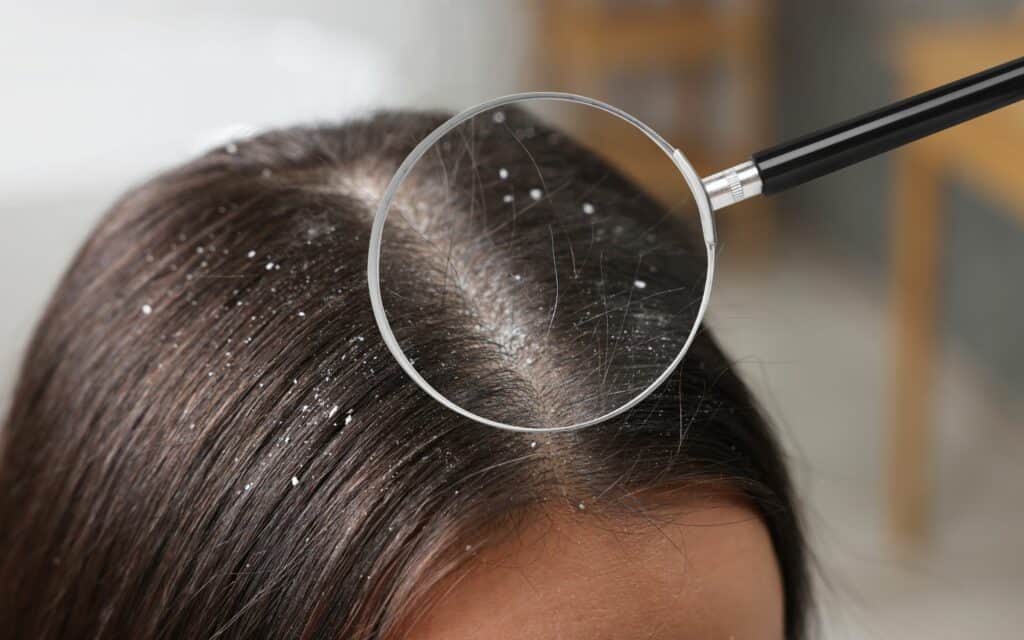
- Dandruff (pityriasis simplex): Flaking without much redness or inflammation. Often an early/looser cousin of seborrheic dermatitis.
- Scalp psoriasis: Well-defined pink plaques with silvery scale: may extend beyond the hairline. Itch can be intense.
- Atopic dermatitis (eczema): Patchy itch with scaling, often in people with a history of allergies or dry, sensitive skin.
- Contact dermatitis: Allergy or irritation from hair dye (PPD), fragrance, preservatives, or styling products. Sudden, burning itch after a new product is a red flag.
- Tinea capitis (fungal infection): More common in children: scaly patches, sometimes with hair breakage and tender lymph nodes.
- Lice (pediculosis capitis): Itch that’s worse at night with visible nits along hair shafts.
- Folliculitis: Inflamed hair follicles causing tender, itchy bumps. Can be bacterial or yeast-driven.
Non-Dermatologic Triggers
Sometimes the scalp is reacting to your environment or routine:
- Dry air, heaters, and cold weather that dehydrate the scalp barrier.
- Excess sweat, helmets, tight headwear, or infrequent wash routines that foster yeast overgrowth.
- Harsh cleansers, frequent heat styling, or high-alkaline products that disrupt pH.
- Stress and poor sleep, both can amplify itch signaling.
- Nutritional gaps (low iron, B12, essential fatty acids) or thyroid imbalance may worsen scaling/itch.
If you want broader context on similar concerns, explore our guides in Dermatology and Skin Health under the categories for dermatology and skin health.
How To Tell What You’re Dealing With
Key Symptoms And Patterns
Use these quick clues to narrow the cause before you choose an itchy scalp treatment:
- Greasy flakes + redness in the T-zone and scalp: seborrheic dermatitis.
- Dry, powdery flaking without much redness: dandruff.
- Thick, silvery scale with defined borders, sometimes beyond hairline: psoriasis.
- Sudden burn/itch after dye or a new product, especially along the hairline: contact dermatitis.
- Patchy hair breakage with scaly plaques (kids), tender nodes: tinea capitis.
- Night-time itch with nits at hair roots: lice.
- Pinpoint pustules or tender bumps around follicles: folliculitis.
Track timing, too: Itch that surges after workouts or during winter points to yeast or barrier issues: itch after salon visits hints at contact irritants.
When To Seek Medical Evaluation And Tests
See a clinician if any of the following apply:
- Severe redness, crusting, pain, or swelling
- Hair loss, broken hairs, or scarring patches
- Fever or lymph node swelling (think tinea capitis in kids)
- Suspected lice that don’t respond to OTC care
- Persistent itch after 2–4 weeks of targeted OTC treatment
- History of severe allergies or reactions to hair products
Typical evaluations may include: dermoscopy, KOH scraping or fungal culture (for tinea), bacterial culture (for folliculitis), patch testing (for contact allergy), or a small biopsy in confusing cases. Bloodwork can be considered if symptoms suggest thyroid issues or significant nutritional deficiencies.
Immediate Relief At Home
Scalp-Friendly Habits And Washing Routines
Before you overhaul your routine, dial in these fundamentals:
- Wash schedule: For most, shampoo 2–4 times weekly. After heavy sweat, rinse or co-wash the scalp the same day.
- Water temp: Use lukewarm water: hot water spikes inflammation and dryness.
- Nails down: Keep nails short: use the pads of your fingers, not nails, to cleanse.
- Gentle brushes and loose styles: Reduce traction and friction that worsen itch.
- Fragrance-free base: Start with a gentle, sulfate-free, fragrance-free cleanser while you test actives.
Targeted Home Remedies With Evidence
A few options can calm itch while you identify the cause:
- Cool, damp compresses: 5–10 minutes to blunt the itch-scratch cycle.
- Colloidal oatmeal rinse: Soothes inflammation: mix a packet into cool water and pour over scalp, then rinse.
- Tea tree oil (diluted): Shampoos with 1–5% tea tree oil can help dandruff: avoid direct, undiluted application.
- Mineral oil or coconut oil pre-wash: 20–30 minutes before shampooing to soften scale: useful for seborrheic dermatitis and mild psoriasis. Patch test first.
- Oral antihistamines at night: Helpful for sleep-disrupting itch. Non-drowsy types are less effective for inflammatory itch but can be used daytime if needed.
Avoid undiluted essential oils, vinegar soaks, and harsh physical scrubs, they often worsen barrier damage.
Over-The-Counter Treatments That Work In 2026
Active Ingredients And How To Choose
Modern itchy scalp treatment relies on proven actives. Match the ingredient to your pattern:
- Antifungals for dandruff/seb derm: ketoconazole 1%, ciclopirox 1%, piroctone olamine, selenium sulfide 1%. These reduce Malassezia yeast and inflammation.
- Anti-inflammatory/keratolytics: salicylic acid 2–3% (lifts scale), sulfur 2–5% (antimicrobial/keratolytic), coal tar (where permitted) for scaling disorders.
- Zinc pyrithione: Still available in some regions, effective anti-yeast/antimicrobial. Check local regulations.
- Itch soothers: menthol (cooling), pramoxine (topical anesthetic), colloidal oatmeal.
- Sensitive skin options: fragrance-free, low-residue formulas: look for ceramides, glycerin, panthenol to support the barrier.
If contact allergy is suspected, avoid fragrance, formaldehyde-releasers, methylisothiazolinone, and PPD-adjacent dyes.
How To Use Shampoos, Tonics, And Serums Effectively
- Contact time: Leave medicated shampoos on the scalp 3–5 minutes before rinsing.
- Frequency: Start 3x/week for 2–3 weeks, then taper to 1–2x/week maintenance.
- Rotation strategy: Alternate two mechanisms (e.g., ketoconazole M/W, salicylic acid F) to reduce relapse.
- Targeted application: Focus on the scalp, not lengths. Use a nozzle-tip bottle or part hair in sections.
- Leave-ons at night: Pramoxine, mild corticosteroid lotions (OTC in some regions), or antifungal serums can calm flare-ups.
- Post-wash: Lightweight, fragrance-free scalp tonics keep hydration without greasiness.
If you’re exploring ingredients, our Skincare Ingredients A to Z library is a helpful companion.
Prescription And In-Office Options
Topicals, Orals, And Short-Course Steroids
When OTC care isn’t enough, clinicians tailor therapy to your diagnosis:
- Seborrheic dermatitis: Ketoconazole 2% or ciclopirox shampoos/foams: short courses of low- to mid-potency topical steroids (lotion/foam): topical calcineurin inhibitors (pimecrolimus/tacrolimus) off-face and along hairline for maintenance.
- Psoriasis: Calcipotriene (vitamin D analog), betamethasone-calcipotriene combinations, salicylic acid keratolytics: for moderate-severe disease, systemic options (e.g., biologics) guided by a dermatologist.
- Atopic dermatitis: Topical steroids for flares: non-steroidal options (tacrolimus/pimecrolimus). In 2026, topical JAK inhibitors (e.g., ruxolitinib) are increasingly used on focal areas under supervision.
- Contact dermatitis: Identify and avoid allergens (patch testing). Short steroid courses to calm inflammation.
- Tinea capitis: Requires oral antifungals (terbinafine or griseofulvin, depending on organism) plus antifungal shampoo to reduce spread.
- Lice: Prescription ovicidal agents if resistant: meticulous nit combing.
- Neuropathic or chronic pruritus: Options may include topical doxepin, gabapentin/pregabalin, or mirtazapine for nocturnal itch, case by case.
Topical steroids should be time-limited on the scalp (often 1–2 weeks for flares) to minimize side effects like skin atrophy.
Procedures And Emerging Therapies
- Targeted phototherapy: Excimer or comb-based narrowband UVB can reduce scalp psoriasis plaques and itch where hair density limits standard phototherapy.
- Microbiome-informed care: Some 2026 dandruff systems pair antifungals with barrier-repair serums and prebiotics to maintain remission.
- Biologics: For moderate–severe psoriasis or atopic dermatitis with significant scalp involvement, modern biologics (e.g., IL-17/IL-23 or IL-4/13 pathway inhibitors) can dramatically reduce itch.
- Botulinum toxin for scalp dysesthesia: Limited but growing evidence for select neuropathic itch cases, not first-line.
If you’re considering clinic-based options, browse our cosmetic treatments hub for an overview of in-office care, and check our dermatology category for medical management insights.
Prevention And Long-Term Scalp Care
Routine Maintenance And Lifestyle
- Maintain a maintenance day: Use your anti-dandruff shampoo 1x weekly even when clear.
- Balance sweat and wash: After workouts, at least rinse the scalp: don’t let sweat sit under hats or headbands.
- Product discipline: Introduce one new product at a time: patch test along the hairline for 48 hours if you’ve had reactions.
- Scalp-friendly styling: Limit high heat, tight ponytails, and heavy hold products that occlude follicles.
- Stress and sleep: Mindfulness, exercise, and consistent sleep schedules lower neuroinflammation and itch perception.
- Diet: Aim for balanced protein, omega-3s, and iron-rich foods. Hydration supports the barrier (it’s not a cure, but it helps).
Special Considerations For Kids, Curly/Coily Hair, And Sensitive Skin
- Kids: Favor gentle, fragrance-free shampoos. For cradle cap/seborrheic dermatitis, use mineral oil soaks followed by a mild medicated shampoo as directed by a pediatrician. Tinea capitis needs medical treatment.
- Curly/coily hair: Wash cadence may be weekly, but keep the scalp clean. Try a nozzle-tip bottle to deliver medicated shampoo to the scalp, then follow with a rich, silicone-free conditioner on lengths. Choose non-comedogenic oils (jojoba, squalane) on the scalp if needed. Avoid heavy waxes if you’re prone to seb derm.
- Sensitive skin: Pick fragrance-free, dye-free formulas with minimal botanicals. Look for labels stating hypoallergenic. Start with one active at a time and extend rinse times gradually.
For whole-body care that supports skin and hair, explore our guides in body care and hair health.
Conclusion
You don’t have to live with an itchy scalp, or guess at fixes. Start by identifying your pattern, then match it to targeted ingredients and routines. Most people improve within 2–4 weeks using the right OTC plan: an antifungal shampoo, a keratolytic for scale, and a simple, fragrance-free base. If itch persists, spreads, or affects sleep or work, loop in a dermatologist for prescription options or in-office therapies. With a smart, 2026-ready approach to itchy scalp treatment, relief is realistic, and maintainable.
Itchy Scalp Treatment: FAQs for 2026
What is the most effective itchy scalp treatment in 2026 for seborrheic dermatitis?
Start with antifungal shampoos (ketoconazole 1–2%, ciclopirox 1%, or selenium sulfide 1%) and add salicylic acid 2–3% to lift scale. Leave on 3–5 minutes, use 3 times weekly for 2–3 weeks, then maintain weekly. Rotate actives and pair with a gentle, fragrance-free base to support the scalp barrier.
How often should I use medicated shampoo for an itchy scalp, and how long should it stay on?
For itchy scalp treatment, begin 3 times weekly for 2–3 weeks with 3–5 minutes of contact time, focusing on the scalp (not hair lengths). Then taper to 1–2 times weekly for maintenance. Consider rotating mechanisms (e.g., ketoconazole and salicylic acid) to reduce relapse and keep symptoms controlled.
How can I tell if my itchy scalp is dandruff, seborrheic dermatitis, psoriasis, or contact dermatitis?
Dandruff shows dry, powdery flakes with little redness. Seborrheic dermatitis has greasy scale and redness around the hairline, brows, and ears. Psoriasis forms thick, silvery plaques that may extend beyond the hairline. Sudden burning itch after new dye or products suggests contact dermatitis, especially along the hairline.
When should I see a dermatologist or get tests for an itchy scalp?
Seek care for severe redness, crusting, pain, swelling, hair loss or breakage, fever, swollen lymph nodes, suspected lice unresponsive to OTCs, or itch persisting after 2–4 weeks of targeted care. Tests may include dermoscopy, fungal/bacterial cultures, patch testing, bloodwork for thyroid/nutritional issues, or a small biopsy.
Can an itchy scalp cause hair loss, and will it grow back?
Frequent scratching can cause breakage and shedding, and inflammatory conditions (psoriasis, severe seborrheic dermatitis, tinea capitis) may temporarily thin hair. Most cases recover once inflammation or infection is treated. Scarring causes are uncommon but need prompt evaluation. Early, targeted treatment helps protect follicles and supports normal regrowth over weeks to months.
Does diet help with itchy scalp, and which nutrients matter most?
Diet won’t replace medication, but balanced protein, iron, B12, zinc, and omega‑3s support scalp and hair health. Deficiencies can worsen scaling or itch. Hydration and an anti‑inflammatory pattern (fish, plants, whole grains) may modestly help. Test before supplementing; address low iron/B12 or thyroid imbalance with your clinician.